Monday Morning Coffee Newsletter - Aug 3 2026
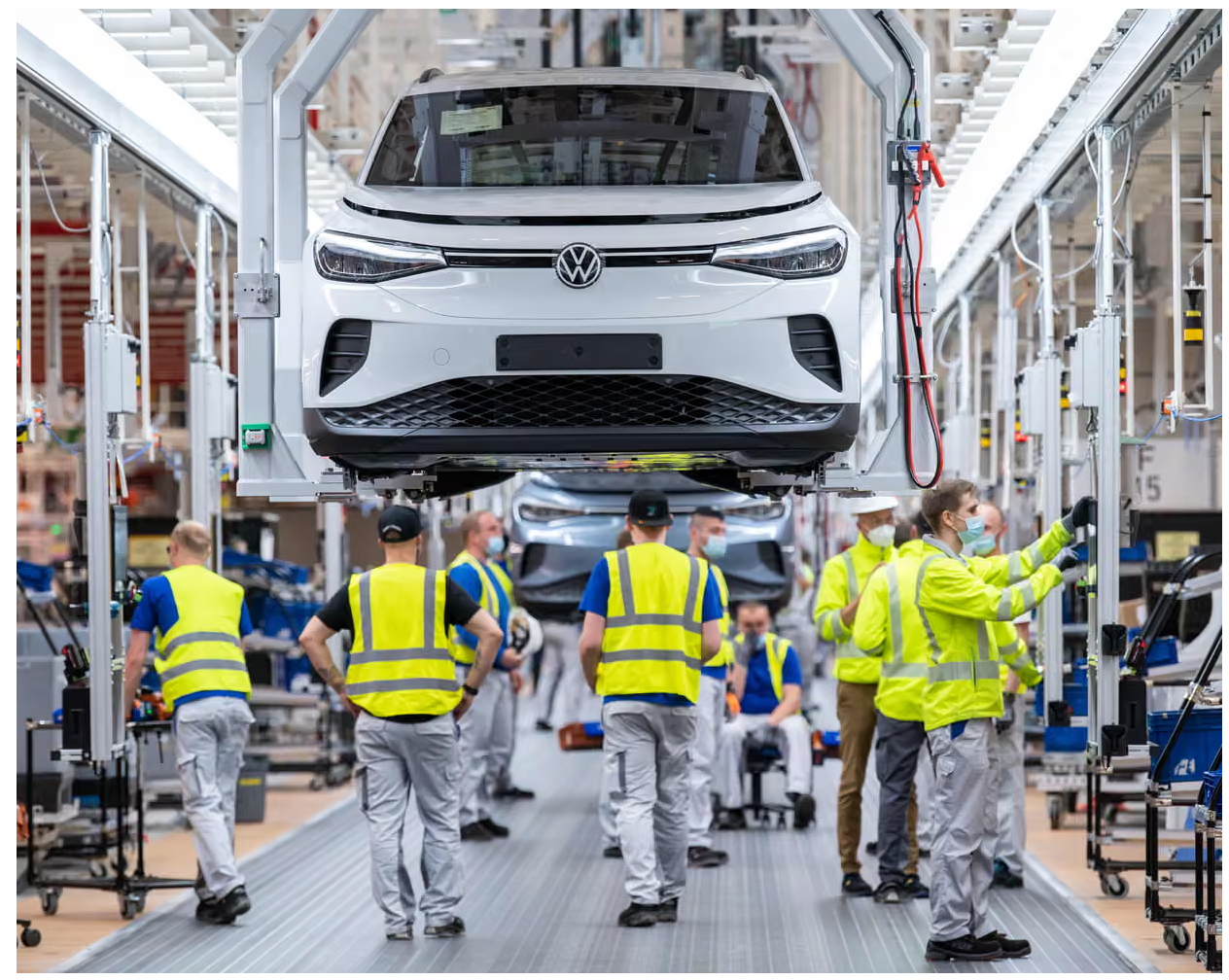
This week’s biggest themes: supplier resiliency, manufacturing localization, automation scaling, and the continued shift toward controlling critical supply chains.
The most consequential stories for manufacturing executives centered around:
- Supplier continuity risks exposed by the Tesla–Angstrom dispute.
- Increasing investment in AI-driven industrial automation.
- OEM moves to localize production and reduce geopolitical exposure.
- Medical device manufacturers continuing to optimize and consolidate manufacturing footprints.
☕ If you have time for an espresso
1. Tesla supplier dispute highlights hidden risks in automotive supply chains
Tesla has filed suit against Angstrom Automotive Group after the supplier reportedly closed its Texas facility and Tesla sought access to production tooling used for Cybertruck components. The dispute highlights a broader manufacturing lesson: ownership of tooling, supplier financial health, and single-source dependencies remain major risks even for the largest OEMs.
Why it matters: OEMs and Tier 1 suppliers are increasingly reviewing supplier financial stability, tooling agreements, and second-source strategies as programs become more complex.
https://www.roadandtrack.com/news/a73284750/tesla-sues-cybertruck-supplier-report/
2. Industrial robotics company Agile Robots accelerates growth through AI and manufacturing expertise
German robotics company Agile Robots is reportedly targeting significant growth in 2026, combining AI-powered robotics with factory-floor integration expertise. The company has expanded through acquisitions, including thyssenkrupp Automation Engineering, strengthening its position in industrial automation systems.
Why it matters: The next wave of manufacturing automation is moving beyond individual robots toward complete intelligent production systems combining robotics, AI, software, and manufacturing engineering.
3. OEM localization continues as manufacturers rethink North American supply chains
Toyota’s Texas expansion and broader OEM investments demonstrate continued movement toward North American production capacity as companies balance tariffs, logistics costs, and supply chain risk. Toyota announced a major expansion of its San Antonio truck production footprint, adding capacity for Tacoma production.
Why it matters: Localization is no longer only a cost discussion. OEMs are increasingly prioritizing regional supply chains, shorter logistics paths, and lower geopolitical exposure.
https://www.businessinsider.com/trump-toyotas-texas-investment-tariffs-usmca2026-7
4. Medical device manufacturers continue manufacturing footprint optimization
FDA filings this month show continued activity around medical device manufacturing changes, including alternate suppliers, manufacturing process changes, equipment additions, and facility consolidation. Examples include Abbott manufacturing changes and supplier/manufacturing updates for cardiovascular devices.
Why it matters: Medical device companies continue balancing supply continuity, regulatory compliance, and manufacturing efficiency—creating opportunities for qualified domestic suppliers.
https://www.fda.gov/medical-devices
☕ If you're sipping a latte
5. Humanoid robotics faces a reality check: factories need solutions, not demonstrations
Humanoid robots continue attracting investment, but industrial adoption is increasingly focused on practical factory applications rather than demonstrations. Companies are prioritizing flexible automation, AI-enabled inspection, material handling, and production support.
Manufacturing takeaway: The winners are likely to be companies that solve measurable factory problems—not simply those with the most advanced-looking robots.
6. Industrial cybersecurity becomes a manufacturing priority
Industrial automation providers continue expanding cybersecurity offerings as connected factories create new operational risks. Rockwell Automation recently highlighted industrial cybersecurity deployments focused on operational technology visibility and resilience.
Manufacturing takeaway: As factories become more digital, cybersecurity becomes part of supplier qualification and operational readiness.
https://www.automation.com/articles-and-news
7. Medical device supply chains continue shifting toward alternate suppliers
Recent FDA manufacturing supplements show manufacturers adding alternate production capabilities, changing suppliers, and consolidating operations to improve resilience.
Manufacturing takeaway: Regulatory-qualified suppliers with strong process controls remain strategically valuable as device companies reduce single-source exposure.
8. Physical AI moves closer to industrial deployment
AI-enabled manufacturing systems are increasingly combining robotics, machine vision, digital twins, and factory data. The challenge is shifting from proving technology capability to integrating systems into reliable production environments.
Manufacturing takeaway: Companies with automation expertise, controls knowledge, and production engineering experience will be positioned to support the next generation of factories.
☕ If you've got a venti anything
9. Supplier financial health is becoming a strategic manufacturing issue
The Tesla–Angstrom dispute is another example of how supplier instability can quickly become an OEM production risk. The issue is not limited to automotive—across industries, manufacturers are reevaluating suppliers based on financial strength, capacity commitments, tooling ownership, and operational redundancy.
For decades, supply chain optimization focused heavily on unit cost. The current environment is forcing companies to consider a broader equation:
- Can the supplier survive a volume reduction?
- Is critical tooling protected?
- Is there qualified backup capacity?
- Is the supplier geographically aligned with production needs?
10. Automation investment is shifting from labor replacement to manufacturing scalability
The industrial automation market is increasingly focused on helping manufacturers scale without adding proportional labor. AI-enabled robotics, flexible automation, and smarter production systems are becoming tools to address workforce shortages and improve consistency.
The opportunity for suppliers is significant: automation adoption requires not only robots, but also:
- Fabricated structures
- Electrical assemblies
- Controls integration
- Precision machining
- Testing systems
- Production engineering support