Monday Morning Coffee Newsletter Sept. 14 2026
If you have time for an espresso
GE Aerospace moves to own a critical castings supplier
GE Aerospace agreed to acquire Consolidated Precision Products for $11.75 billion, bringing a supplier of mission-critical airfoil and structural castings into the engine maker. CPP serves nearly every major current-generation commercial aircraft program as well as defense and power customers, making this a major vertical-integration move around constrained capacity.
UPDATE: U.S.-Canada trade fight moves beyond tariffs
New U.S. measures expand 50% tariffs to additional Canadian goods, add import bans on selected products, and direct the removal of Canadian-origin goods from long-term federal purchasing schedules. For manufacturers with integrated cross-border programs, the immediate work is part-level exposure mapping, contract review, customs classification, and alternate-source planning.
Ford commits $1 billion to its highest-revenue U.S. assembly plant
Ford will build a new paint shop at Kentucky Truck Plant, which produces Super Duty pickups, the Expedition, and the Lincoln Navigator. The investment reinforces a core high-margin vehicle hub and will create opportunities across paint systems, controls, environmental equipment, tooling, installation, validation, and plant services.
UPDATE: Hyundai sets an 80% North American local-sourcing goal
Hyundai plans to raise the share of locally sourced parts used in North American vehicle production from about 60% today to 80% by 2030. Paired with 500,000 units of planned additional U.S. capacity, the target points to substantial supplier-development, localization, and cost-down work ahead.
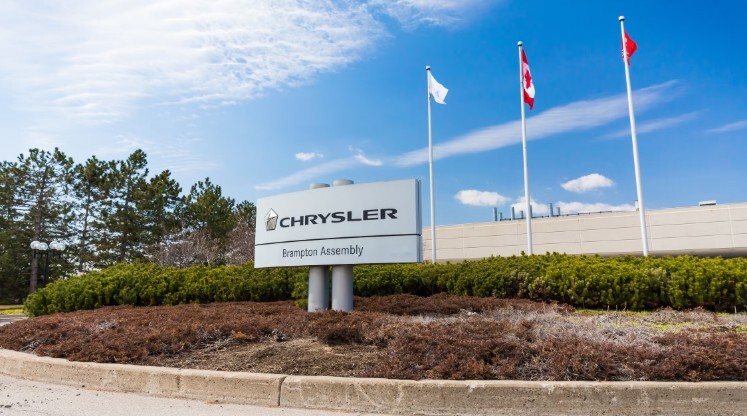
UPDATE: Stellantis signs MOU for a defense-manufacturing future at Brampton
Stellantis signed a memorandum of understanding with armored-vehicle maker Roshel regarding a potential sale of its idled Brampton Assembly plant, while union talks paused over the site's future. The proposal is not a completed sale, but it is a concrete next step in converting surplus automotive capacity to defense manufacturing.
If you're sipping a latte
USA Rare Earth breaks ground on a $1.2 billion magnet plant
The 800,000-square-foot South Carolina facility is planned to produce sintered neodymium-iron-boron magnets plus strip-cast metal and alloy, with commissioning targeted for 2028. The project matters across mobility, robotics, aerospace, defense, semiconductors, energy, and medical technology because it adds a domestic path for a strategically concentrated input.
Siemens Healthineers expands its sole PET-detector manufacturing site
Siemens Healthineers completed a $43.6 million expansion in Rockford, Tennessee, adding 40,000 square feet and renovating existing space. The campus is the company's only manufacturing site for PET detectors, so the investment adds capacity around a high-value, single-site component.
https://www.siemens-healthineers.com/press/releases/rockford-expansion
XPENG commissions an automotive-grade humanoid production line
XPENG says its new IRON line uses more than 80% automation in core processes and transfers automotive quality systems into humanoid manufacturing. Commercial launch and deliveries are planned for 2027, making supplier readiness for actuators, electronics, wiring, precision components, sensors, and validation increasingly tangible.
https://www.xpeng.com/news/01a080371029a057bc8e8a02a2c6012b
GM adds transmission and engine-block capacity at Bedford Casting
General Motors is preparing a $40 million investment at its Indiana casting operation to support 10-speed transmissions, expand eight-speed transmission capacity, and add engine-block production. The 2027 launch is another signal that profitable truck and SUV architectures remain central to near-term manufacturing plans.
Vicor secures New Hampshire sites for two additional power-module fabs
Vicor acquired sites in Merrimack and Hooksett for ChiP Fab-2 and Fab-3, with a combined planned footprint approaching one million square feet. The expansion is intended to support demand for high-density power delivery in AI systems and signals another U.S. capacity build around electronics that advanced equipment increasingly depends on.
If you've got a venti anything
UPDATE: Boston Scientific restores operations, but the backlog lesson remains
Boston Scientific says manufacturing, order fulfillment, and shipping have been fully restored after the August cyberattack, with distribution working at or above normal levels as the company reduces its backlog. The recovery does not erase the operational impact: plants and distribution centers were shut globally, some procedures were lost because hospitals lacked supply, and the company expects to miss prior financial guidance. For manufacturers, cyber resilience belongs in production-continuity planning alongside equipment, utilities, labor, and sub-tier supply.
Covenant opens a Dallas factory built around missile-rate production
Defense startup Covenant opened a 105,000-square-foot Dallas plant for its long-range Anthem system, backed by roughly $150 million in orders and $250 million in funding. The company is designing the product and factory together for production in the thousands, with a stated ramp toward 5,000 units annually. The model will interest any supplier evaluating defense work: production engineering, qualification speed, cost architecture, and scalable sub-tier capacity are being treated as product requirements from day one.
https://www.businesswire.com/news/home/20260909151435/en/
Valeo treats manufacturing flexibility as a hedge against powertrain uncertainty
Valeo is reorganizing manufacturing around flexible plants, shared technologies, regional supply, and AI as powertrain demand and development cycles change faster than expected. The important point is not a single automation tool; it is the ability to move capacity and engineering knowledge across high-voltage, conventional, 12V, and 48V products without locking a plant into one demand forecast. Suppliers facing mixed ICE, hybrid, and EV volumes should be testing equipment reuse, process commonality, and regional capacity options before the next sourcing wave.
What it means for customers
This week's signal is unusually consistent: critical capacity is moving closer to the programs that depend on it, through acquisition, new U.S. plants, local-sourcing targets, and the reuse of automotive assets for defense. OEMs and suppliers should translate that direction into part-level localization plans, capacity and tooling scenarios, and faster qualification paths for alternate sources. At the same time, Boston Scientific's recovery is a reminder that digital systems are now production infrastructure; cyber resilience, backlog recovery, and customer allocation need the same operational discipline as physical supply continuity.