If you have time for an espresso (3–5 must-reads)
- Honda axes three U.S.-made EVs (for now), signaling a hard pivot to capital discipline. The cancellations underscore how quickly product roadmaps are changing as EV profitability timelines stretch.
https://arstechnica.com/cars/2026/03/facing-heavy-losses-honda-cancels-its-three-us-made-electric-vehicles/ - Stryker says a cyberattack is disrupting manufacturing, order processing, and shipping. For med-device supply chains, this is the reminder that “resilience” is now as much about IT architecture as it is about dual-sourcing.
https://www.medtechdive.com/news/strykers-manufacturing-shipping-disrupted-after-cyberattack/814667/ - Ford’s recall count is already massive in 2026—7.4 million vehicles affected across 18 recalls (as of Mar. 13). More software-defined vehicles means fixes can ship faster (OTA), but quality systems and regulatory scrutiny tighten at the same time.
https://www.motor1.com/news/789583/ford-2026-recalls-list-models-affected/ - Nvidia + ABB team up to push “AI-trained” industrial robots from simulation into real factories (commercial availability targeted for later 2026). This is a direct shot at faster commissioning, lower integration cost, and shorter payback for automation projects.
https://www.ft.com/content/c77d99a4-8d75-4f34-8a71-6b1361ebb9b9 - Gas-price anxiety is back in the driver’s seat—and buyers will respond. Jalopnik’s efficiency breakdown is a good proxy for where consumer attention (and messaging) is going to move if energy stays volatile.
https://www.jalopnik.com/2122427/most-efficient-vehicles/
If you’re sipping a latte (3–6 additional reads)
- Rivian details R2 pricing/trim strategy as first deliveries near. It’s another indicator that the “mid-price” EV battleground is heating up—and suppliers will get squeezed on cost-down targets.
https://arstechnica.com/cars/2026/03/rivian-reveals-pricing-and-trim-details-for-its-r2-suv/ - Chevy’s (reborn) Bolt gets a real-world drive: new battery/motor, still targeting mainstream appeal. This kind of platform refresh is exactly where Tier 1/2 partners can win by simplifying BOM and improving manufacturability.
https://arstechnica.com/cars/2026/03/new-battery-new-motor-but-the-2027-chevrolet-bolt-keeps-its-charm/ - Honda denies rumors it’s killing the Prologue EV. Even the denial shows how jumpy the market is—and how quickly OEM production plans can become rumor-fuel.
https://www.motor1.com/news/789994/honda-prologue-production-ends-soon-rumor/ - Agilent to acquire Biocare Medical for $950M. Expect more consolidation around diagnostics and workflow tools—buyers want fewer vendors and tighter end-to-end integration.
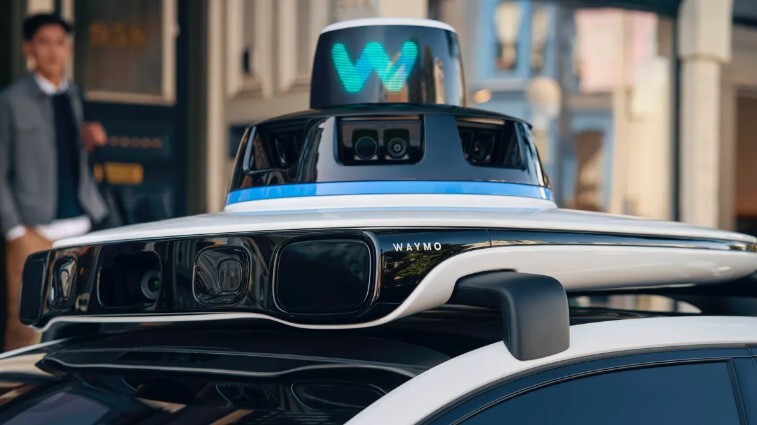
https://www.medtechdive.com/news/agilent-to-buy-biocare-medical-for-950m/814186/ - TIER IV announces AI-based Level 4 autonomous driving platform work and global expansion messaging. Whether or not you buy the timeline, the supplier/partner ecosystem around autonomy platforms keeps maturing.
https://www.prnewswire.com/news-releases/tier-iv-unveils-ai-based-level-4-autonomous-driving-accelerating-global-platform-expansion-across-japan-us-and-europe-302714131.html
If you’ve got a venti anything (2–4 deeper dives)
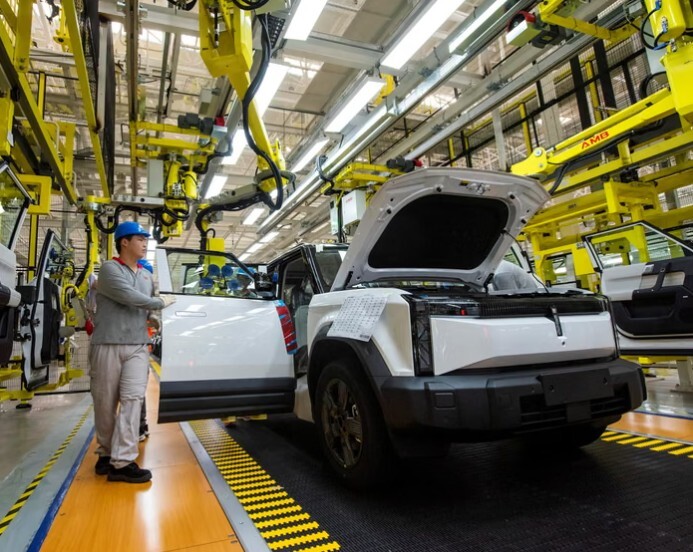
- Humanoid robots are showing up in real auto-parts production—Schaeffler is piloting Digit for material handling. The article gets into the practical constraints (safety rules, isolated operation, supervision) that make today’s deployments narrow—but also why companies are still doing it (labor gaps, uptime, scalability). If this trend sticks, plants will demand more flexible automation plus tighter OT/IT integration to manage it.
https://www.wsj.com/business/south-carolina-schaeffler-plant-robots-d56c91d0 - Lucid lays out its midsize EV platform and basically says SUVs are the profitability path. The subtext: OEMs are optimizing for margins and volume segments first, not enthusiast niches—and platform commonality is the lever. For suppliers, that usually means higher design reuse expectations, stricter cost targets, and more pressure to deliver validated subsystems faster.
https://arstechnica.com/cars/2026/03/lucid-announces-midsize-ev-platform-says-profitability-lies-with-suvs/ - The Stryker cyber incident is a case study in “digital single points of failure.” When manufacturing + shipping are disrupted, the downstream impact is immediate: backorders, expediting, customer support load, and potential regulatory/quality documentation headaches. The companies that win here will treat cybersecurity like quality—measured, audited, and designed-in.
https://www.medtechdive.com/news/strykers-manufacturing-shipping-disrupted-after-cyberattack/814667/
What it means for customers
Volatility is the theme: OEM product plans are shifting fast (canceled programs, rumor-driven production changes), so customers should assume schedules and specs can change midstream and build flexible sourcing/qualification plans. At the same time, the “factory of the future” is arriving unevenly—AI/robotics are real, but deployment success still depends on integration discipline, not hype. Finally, cyber risk is now supply risk: if you can’t ship because your systems are down, it doesn’t matter how good your machining or molding is—customers will prioritize suppliers that can prove operational resilience end-to-end.