Monday Morning Coffee Newsletter: July 13, 2026
If you have time for an espresso
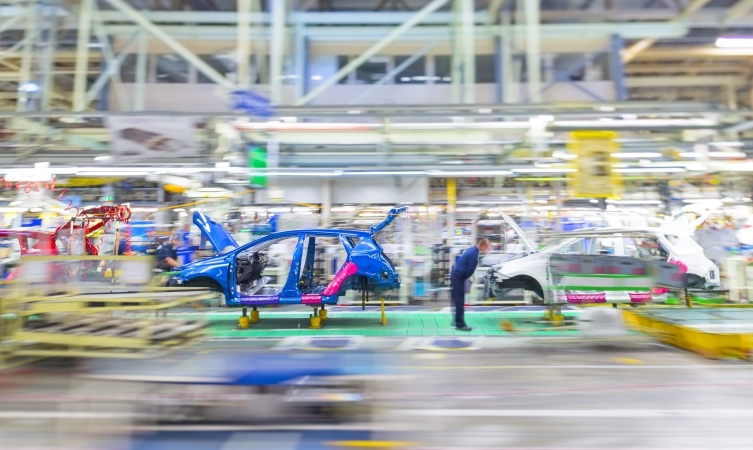
Toyota is putting $3.6 billion into its San Antonio plant to add Tacoma production, 2,000 jobs, and 2.5 million square feet of manufacturing space by 2030. This is a clear localization signal: high-volume North American programs are being moved closer to demand, suppliers, and tariff risk.
https://pressroom.toyota.com/toyota-announces-3-6b-expansion-2000-new-jobs-at-its-san-antonio-plant/
H-One’s KTH Texas will build a new automotive structural-components plant in Seguin, Texas, with ultra-high-strength steel and aluminum capability, automated press lines, and a 3,500-ton lead press. The Toyota announcement gets the spotlight, but supplier investments like this are what make localization real.
https://www.seguintexas.gov/CivicAlerts.aspx?AID=519
Micron announced up to $3 billion in U.S. semiconductor supply-chain investment, including $500 million in financing support for GlobalWafers’ 300mm silicon-wafer facility in Sherman, Texas. For automotive, industrial, defense, and medtech customers, chip supply assurance is becoming a manufacturing strategy issue, not just a purchasing issue.
https://investors.micron.com/news-releases/news-release-details/micron-announces-3-billion-strategic-investment-strengthen-us
Toyota is also using AI to standardize production terminology across planning, production, sales, and supplier interfaces. The practical supplier angle is simple: clean data, common language, and fewer manual translation steps can remove hundreds of hours from capacity planning and program execution.
https://www.automotivemanufacturingsolutions.com/smart-factory/toyotas-ai-push-to-unify-a-fractured-production-language/2694554
If you’re sipping a latte
AMPORTS, Mitsubishi Motors North America, and Port Freeport launched a Texas Gulf Coast logistics collaboration for vehicle imports, processing, and distribution. As production and sourcing footprints shift, port strategy and inland distribution are becoming part of the competitive equation.
https://media.mitsubishicars.com/en-US/releases/amports-mitsubishi-motors-north-america-and-port-freeport-advance-automotive-logistics-collaboration-in-texas
Stellantis reported estimated Q2 consolidated shipments of 1.6 million units, up 10% year over year, with North America up 38%. For suppliers, the signal is that product launches and refreshed vehicle programs can still create meaningful pull-through even in an uneven market.
https://www.stellantis.com/en/news/press-releases/2026/july/stellantis-reports-q2-2026-estimated-consolidated-shipments-of-1-6-million-units-10-percent-year-over-year
Nissan and Chery are exploring production of Chery-brand vehicles at Nissan’s Sunderland plant beginning in 2027. It is another example of underused manufacturing assets being repurposed through partnerships, especially as Chinese OEMs look for localized production in key export markets.
https://www.automotivemanufacturingsolutions.com/news/nissan-chery-explore-sunderland-manufacturing-partnership/2694468
FDA’s medical-device shortage list remains a reminder that supply-chain fragility has not disappeared in regulated markets. Shortage and discontinuation risks put pressure on manufacturers to qualify alternates, improve traceability, and avoid single points of failure in critical components.
https://incompliancemag.com/fda-updates-medical-device-shortages-list/
MD+DI’s latest cybersecurity discussion frames standardization, automation, and traceability as practical requirements for connected medical devices. The lesson carries beyond medtech: software, suppliers, and quality systems now have to be documented from the beginning, not cleaned up at the end.
https://www.mddionline.com/medical-device-regulations/standardization-automation-traceability-are-key-factors-in-cybersecurity-for-medical-devices
If you’ve got a venti anything
Physical AI and robotics continue moving from demonstration to deployment, especially in factories and warehouses where flexibility matters more than fixed automation alone. The important question for manufacturers is not whether AI is interesting; it is whether the system can be validated, integrated, maintained, and trusted in real production.
https://www.techbriefs.com/component/content/article/55444-automate-2026-physical-ai-for-robot-training
https://www.techbriefs.com/component/content/article/55441-ai-drones-bring-real-time-intelligence-to-warehouse-automation
Chery’s takeover of Nissan’s South Africa plant and its Sunderland discussions show how fast manufacturing networks can be reused when one company needs utilization and another needs market access. For suppliers, this kind of reshuffling can create opportunity, but only for companies ready to support new customers, new standards, and changing regional content needs.
https://www.automotivemanufacturingsolutions.com/news/chery-takes-over-nissan-plant-in-south-africa/2694132
The Texas cluster is the deeper story this week: Toyota truck assembly, KTH structural components, semiconductor wafers in Sherman, and Port Freeport logistics all point in the same direction. North American localization is not one decision; it is a chain of capacity, tooling, logistics, workforce, data, and supplier readiness decisions that have to line up.